 Image scaled to 55%
By asking the question,
You Identify a Need for a Significant Shift in the Engineering Practices at Your Company (e.g., moving to Agile, adopting DevOps). How Do You Drive This Change across a Large and Established Team?
The interviewer wants to understand how you handle large-scale changes in an established environment.
They’re looking for the following traits:
- Strategic Planning: Determine your approach to planning and executing a shift in engineering practices.
- Communication Skills: Assess how effectively you communicate the need for change and manage team expectations.
- Problem-Solving Skills: Look at how you address challenges and resistance during the transition.
- Team Engagement: See how you motivate and involve the team in the change process.
- Impact Measurement: Understand how you measure and demonstrate the success of the new engineering practices.
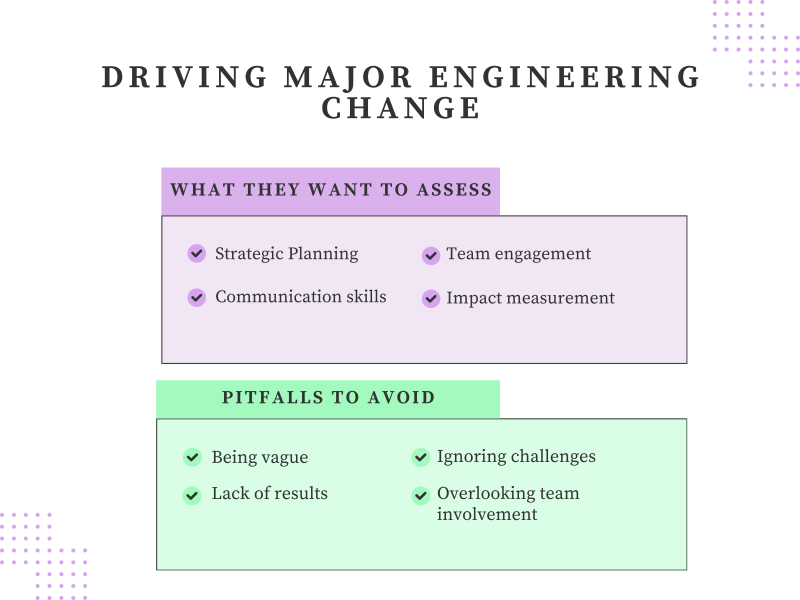 Image scaled to 90%
Structuring Your Response With the STAR Method
Situation: “In my previous role as a senior engineering manager, our company was facing increasing competition and the need to speed up our product release cycle. After evaluating our processes, I identified that moving to Agile and adopting DevOps practices could significantly improve our efficiency and product quality.”
Task: “My task was to drive this major shift across a large and established team that was accustomed to traditional waterfall methods. The challenge was to ensure that the team understood the benefits and adopted the new practices smoothly.”
Action: “When I first suggested Agile and DevOps, it was like proposing we switch from driving cars to flying planes. The team was skeptical and a bit nervous. To ease the transition, first, I organized a series of workshops to educate the team on Agile and DevOps principles. Then, I brought in external experts to provide hands-on training and shared success stories from other companies. I also set up a pilot project with a small, motivated team to implement Agile and DevOps practices, allowing us to identify and address any issues on a smaller scale before rolling it out company-wide.
Next, I established clear communication channels to keep everyone informed about the progress and benefits of the change. I held regular meetings to gather feedback and adjust our approach based on the team’s input. Additionally, I worked closely with key stakeholders to gain their support and address any concerns they had.”
Result: “As a result of these actions, we successfully transitioned to Agile and DevOps within six months. The pilot project showed a 30% increase in delivery speed and a significant improvement in code quality, which convinced the rest of the team to adopt the new practices. Overall, the shift led to a more collaborative and efficient workflow, increased team morale, and faster time-to-market for our products.”
Pitfalls To Avoid
-
Being Vague: Avoid giving a generic answer without specific details. The interviewer is looking for concrete examples and measurable outcomes.
-
Ignoring Challenges: Don’t overlook the difficulties you faced and how you addressed them. Acknowledging challenges shows your problem-solving skills and resilience.
-
Overlooking Team Involvement: Failing to mention how you involved and supported your team can make it seem like you imposed changes without considering their input and well-being.
-
Lack of Results: Ensure you provide clear, quantifiable results to demonstrate the impact of your actions. Avoid ending your answer without showing the positive outcomes of the change.